

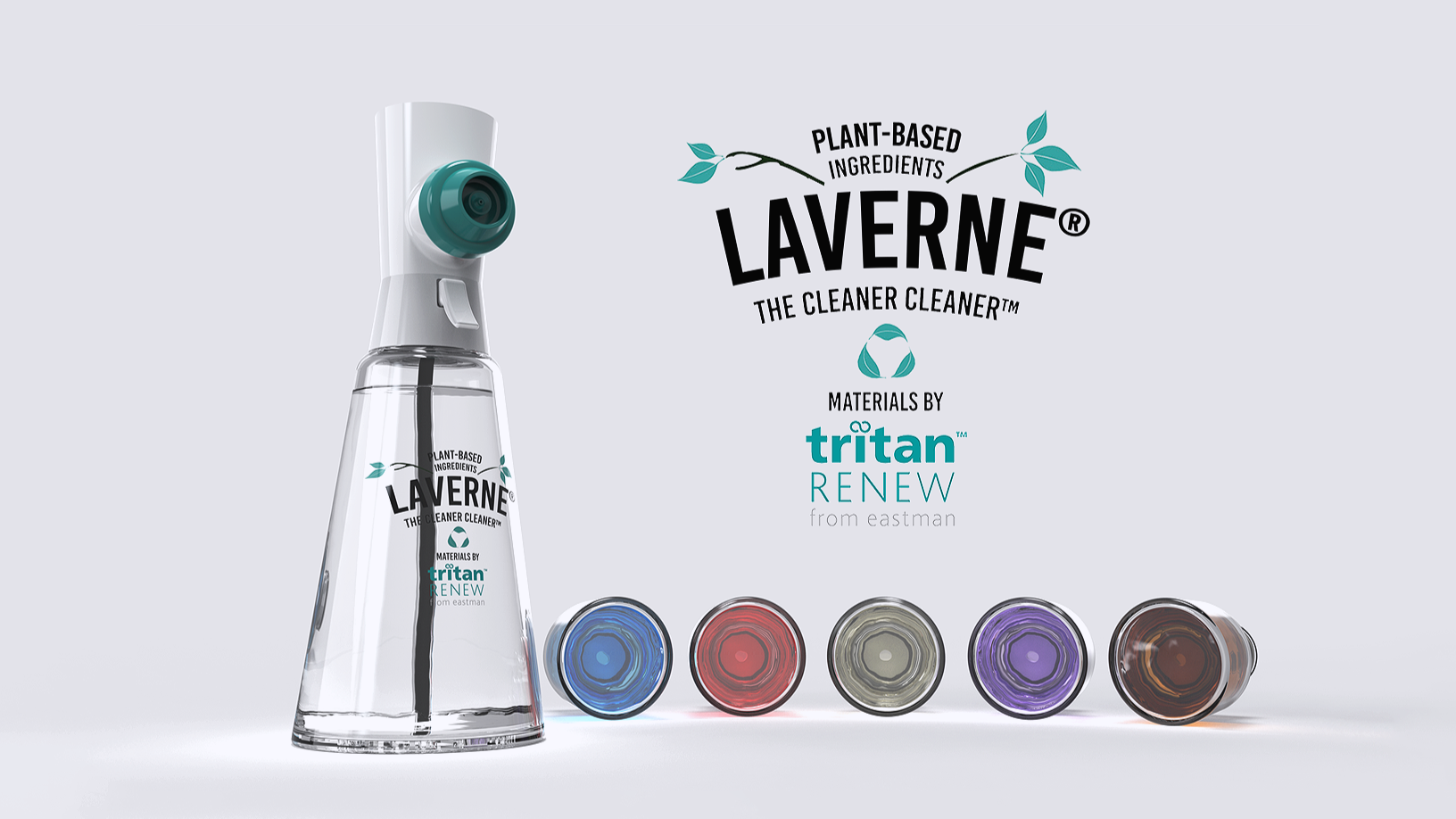
LAVERNE, the universal spray bottle, with five concentrate cartridges. SolidWorks, KeyShot. Branding in Illustrator.
Universal Spray Bottle
One bottle, concentrated cleaner cartridges, and tap water mixed in sprayhead. Eastman’s Tritan Renew recycled plastic.
NC State University, BID
Studio
Fall 2021
16 weeks
Sponsored by

Instructor: Kathryn Wozniak
Revisiting for 2027 iF Design Student Award.
Most household cleaners are sold as water in a cheap plastic bottle. The bottle breaks, the trigger clogs, the cabinet under the sink fills up, and it all goes in the trash. Eastman asked our studio to design around Tritan Renew, a durable co-polyester with recycled content. I asked why the bottle had to be disposable at all.
LAVERNE is a spray bottle you keep. Water in the body, concentrated cleaner in a cartridge that clicks into the head, mixed on the way to the nozzle. Swap the cartridge to change cleaners. Send empties back. In 2026 I’m revisiting it with a team for the iF Design Student Award: less plastic, and a working model.
Problem
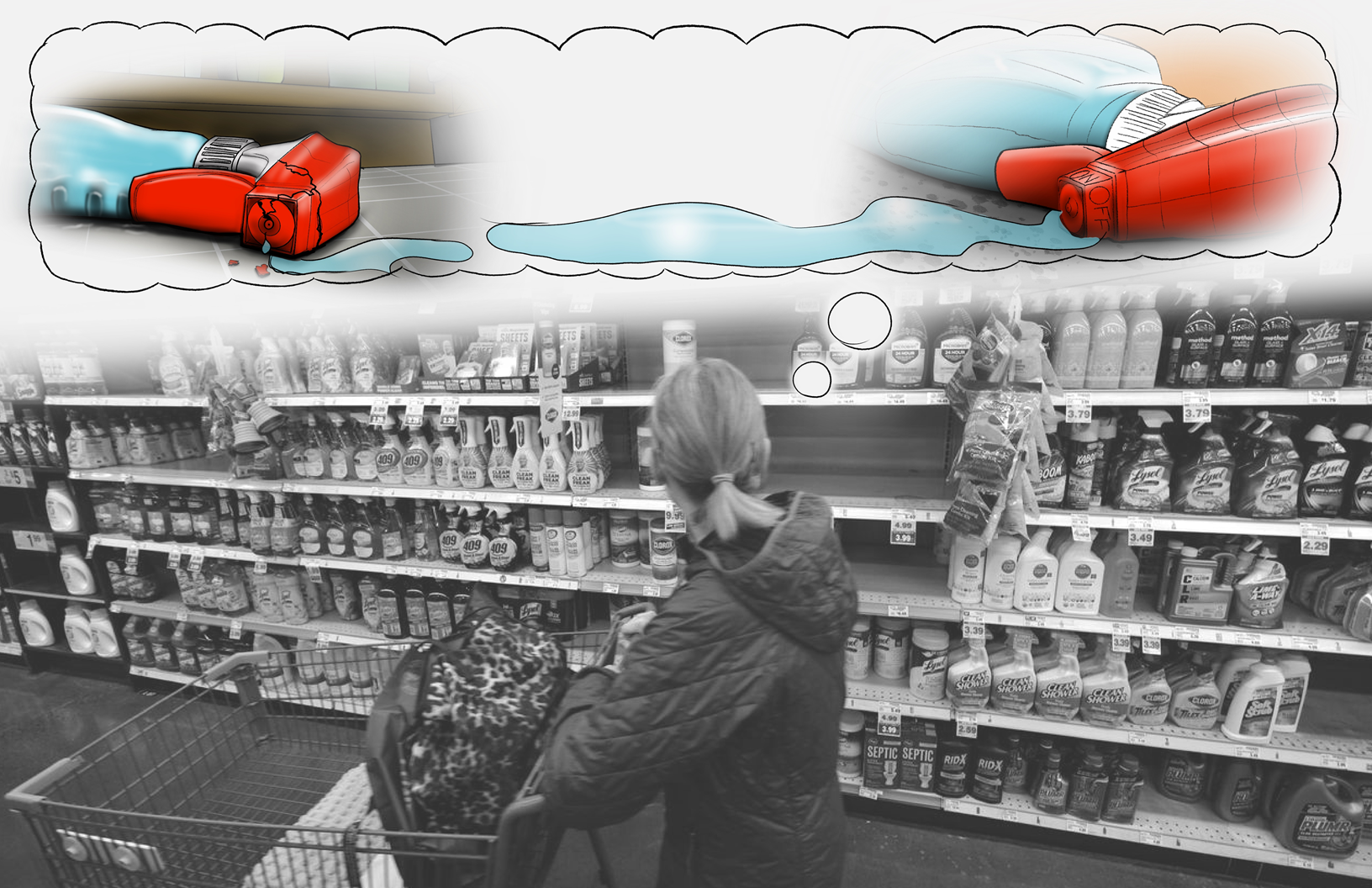
The aisle. Every option is water in a bottle that breaks. Thought bubble drawn in Procreate.
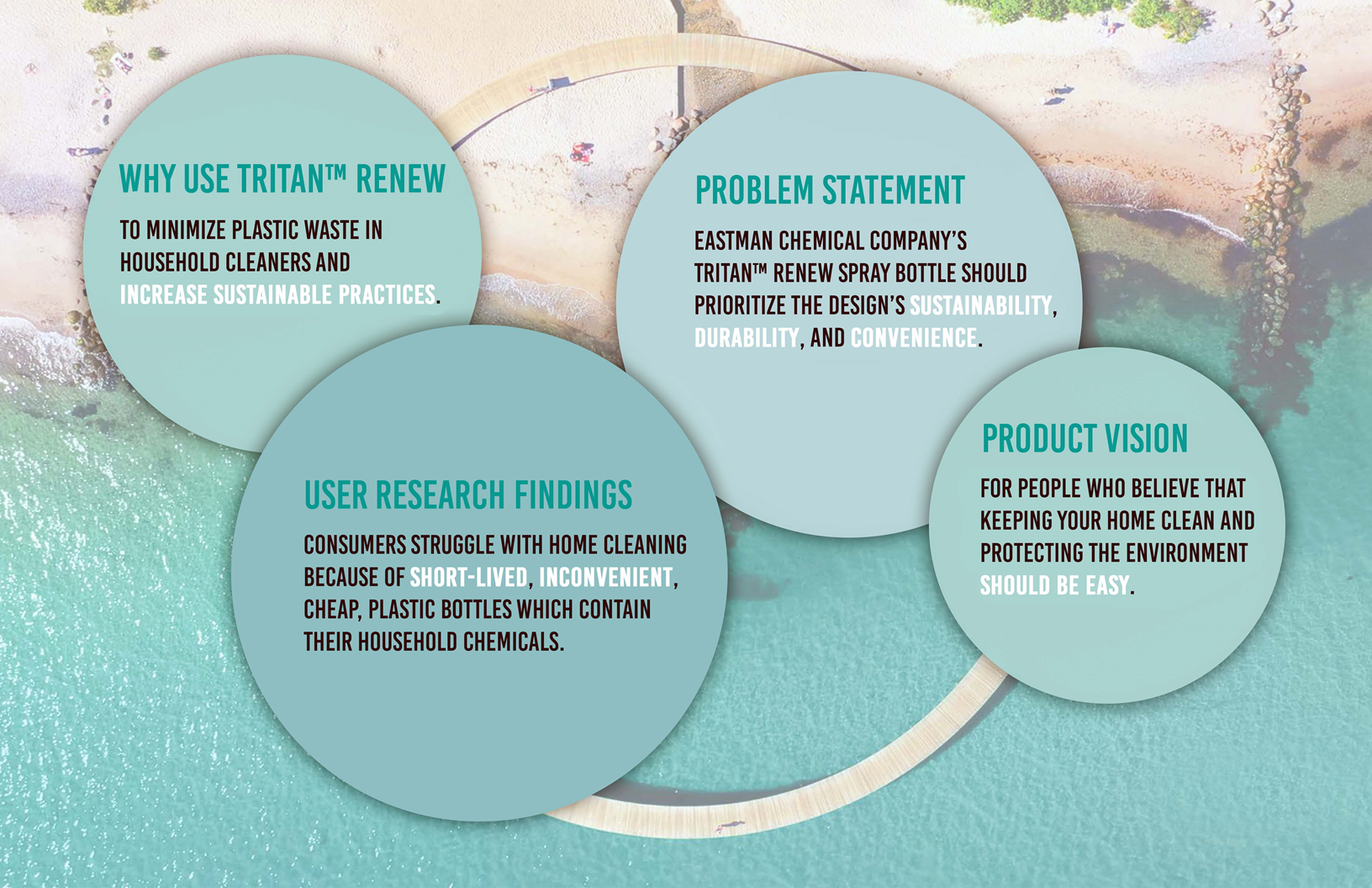
Driving forces. Why Tritan Renew, the problem, the findings, the vision. From the second review. Illustrator; background photo, stock.
Consumers struggle with home cleaning because of short-lived, inconvenient, cheap plastic bottles that hold their household chemicals. People say they want sustainable cleaners, then buy the disposable bottle anyway, because scent, price, durability and convenience are more desirable.
Eastman brief: raise sustainability awareness with Tritan Renew material.
Product vision: for people who believe that keeping your home clean and protecting the environment should be easy.
Intuitive, durable, sustainable, convenient.
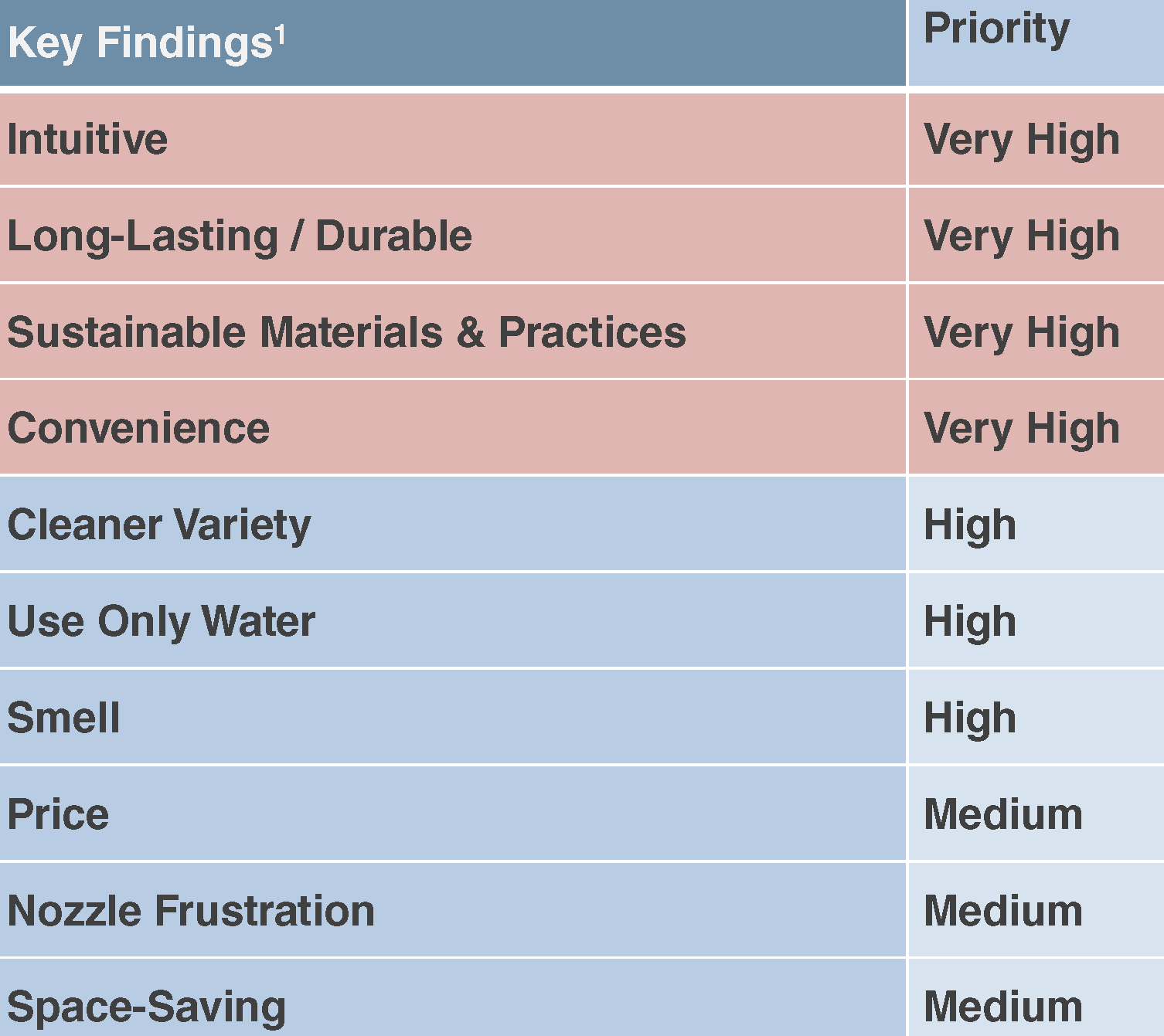
What people asked for, ranked. The top four became the design criteria. From the first review.
How might we…
make one bottle do the work of the shelf under the sink?
let people switch cleaners without switching bottles?
make the sustainable choice the easier one, not the virtuous one?
keep the bottle out of the trash for a decade?
Research
Who: interviews and conversations with people who clean their homes, plus a look under their sinks.
What they value: quality and sustainability. They expect a good bottle to last years, and nozzles frustrate them.
What I heard: “Refill stations would make the experience so fun if they were like drink machines!” And, more than once: I didn’t know the nozzle was closed.
Market: Unilever launched refill trial in Europe. Refill stations in European chains, few in the US. Average US household spends $170 a year on cleaners.
Design Criteria
Intuitive. Nothing to measure. Nozzle state obvious at a glance.
Durable. Body and head built to last years. Replace the cartridge, not the bottle.
Sustainable. Ship concentrate, not water. Recycled content in every molded part. Cartridges go back, not out.
Convenient. Any cleaner in one bottle. Refills without a special trip.
Ideation
Three architectures: cartridge separate from the bottle; cartridge with its own mixing chamber; cartridge carrying chamber and nozzle. The middle one won: the cartridge stays small and cheap to ship, the nozzle stays with the bottle.
Two ways to refill: in-store stations first, with a barcode on each cap telling the machine what to fill and what to charge. The US had almost no refill infrastructure, so by the second review the plan moved to the mail: a subscription that ships cartridges and takes empties back, modeled on the early Netflix envelope.
Business model: no subscription, $10 a month, or $100 a year, each with credit for every cartridge returned.
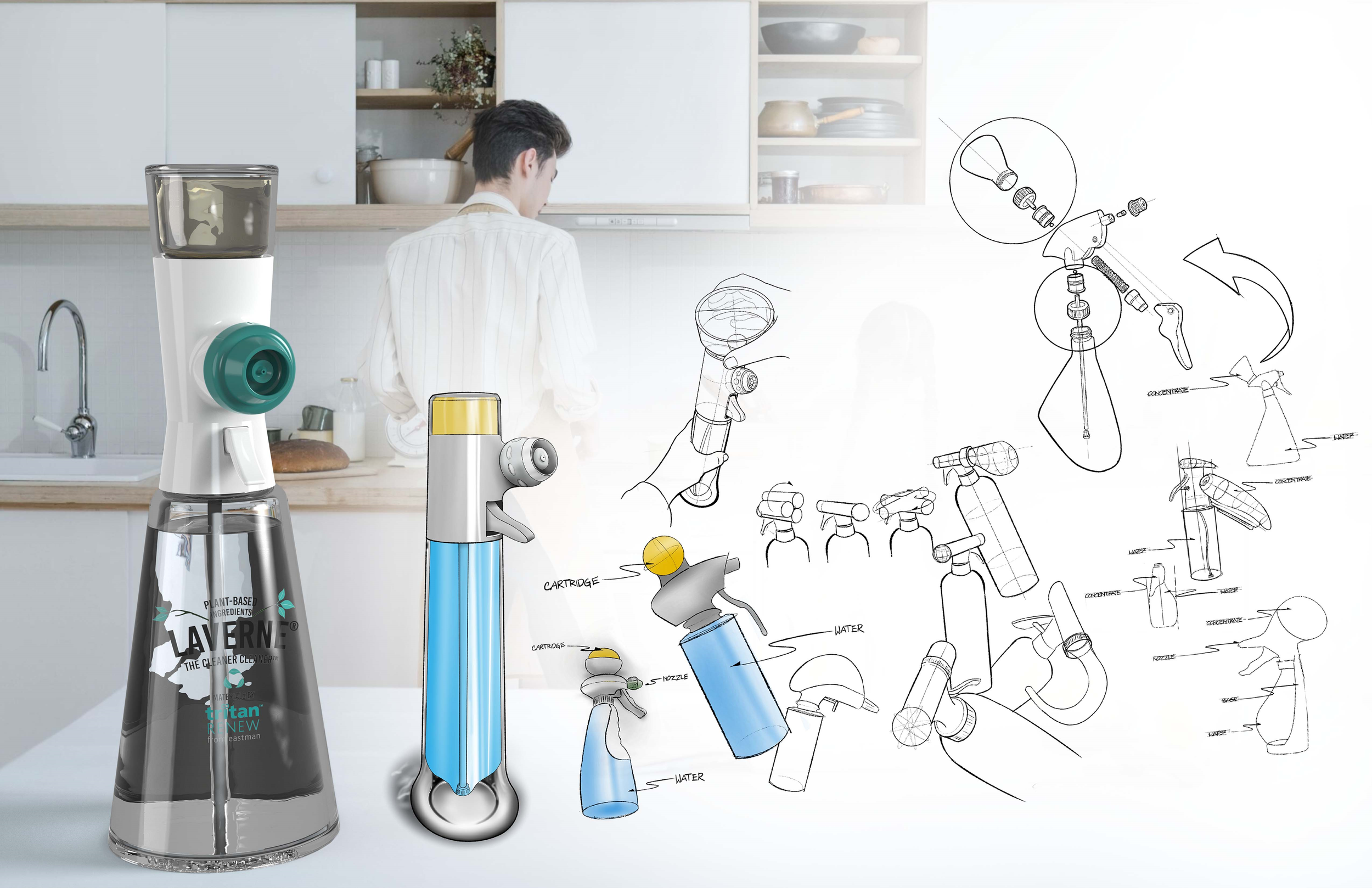
Ways to mix and spray. Mechanism sketches behind the three bottle concepts. Procreate and KeyShot.
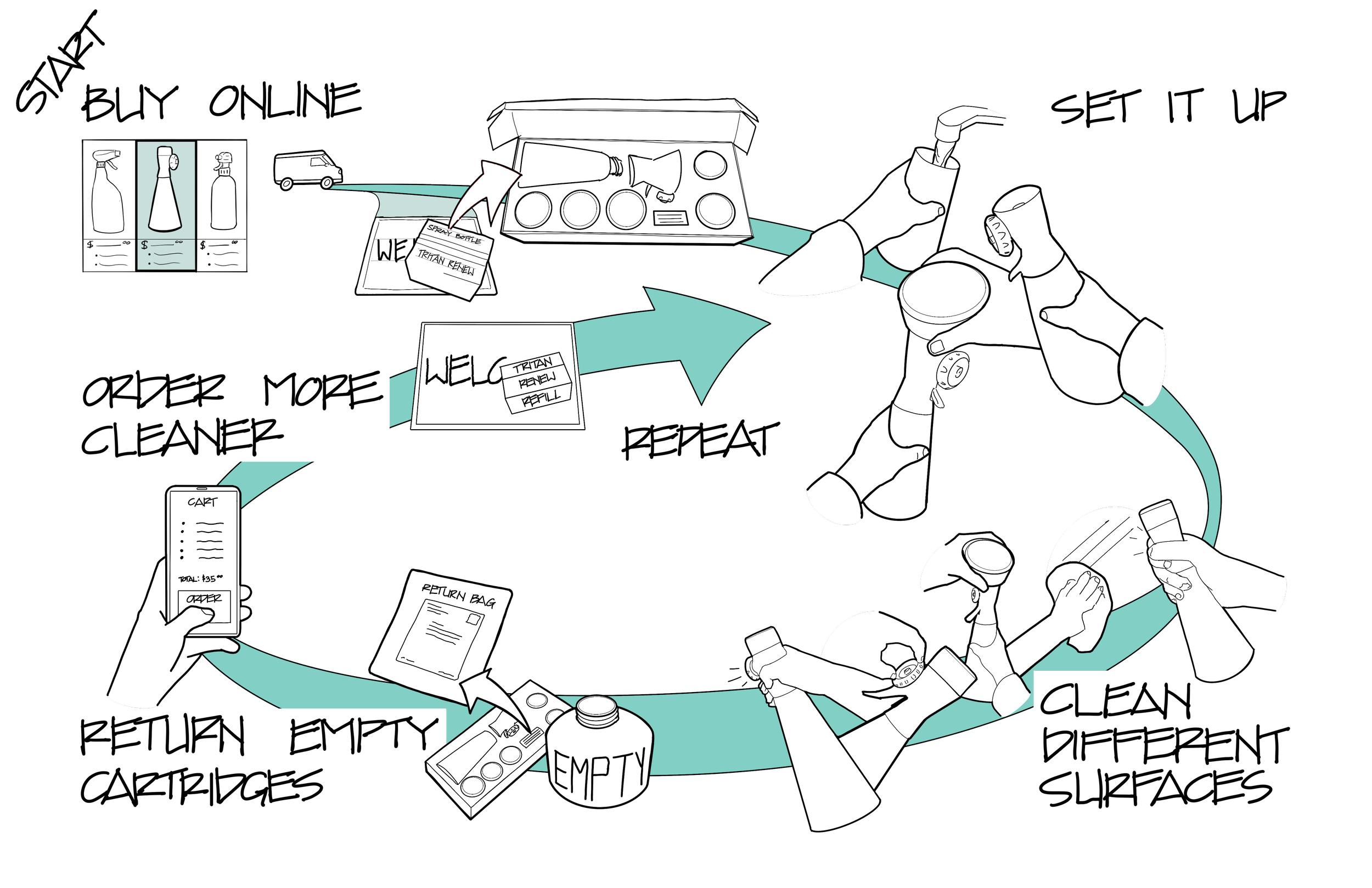
The loop. Buy, set up, clean, return, reorder. Procreate.
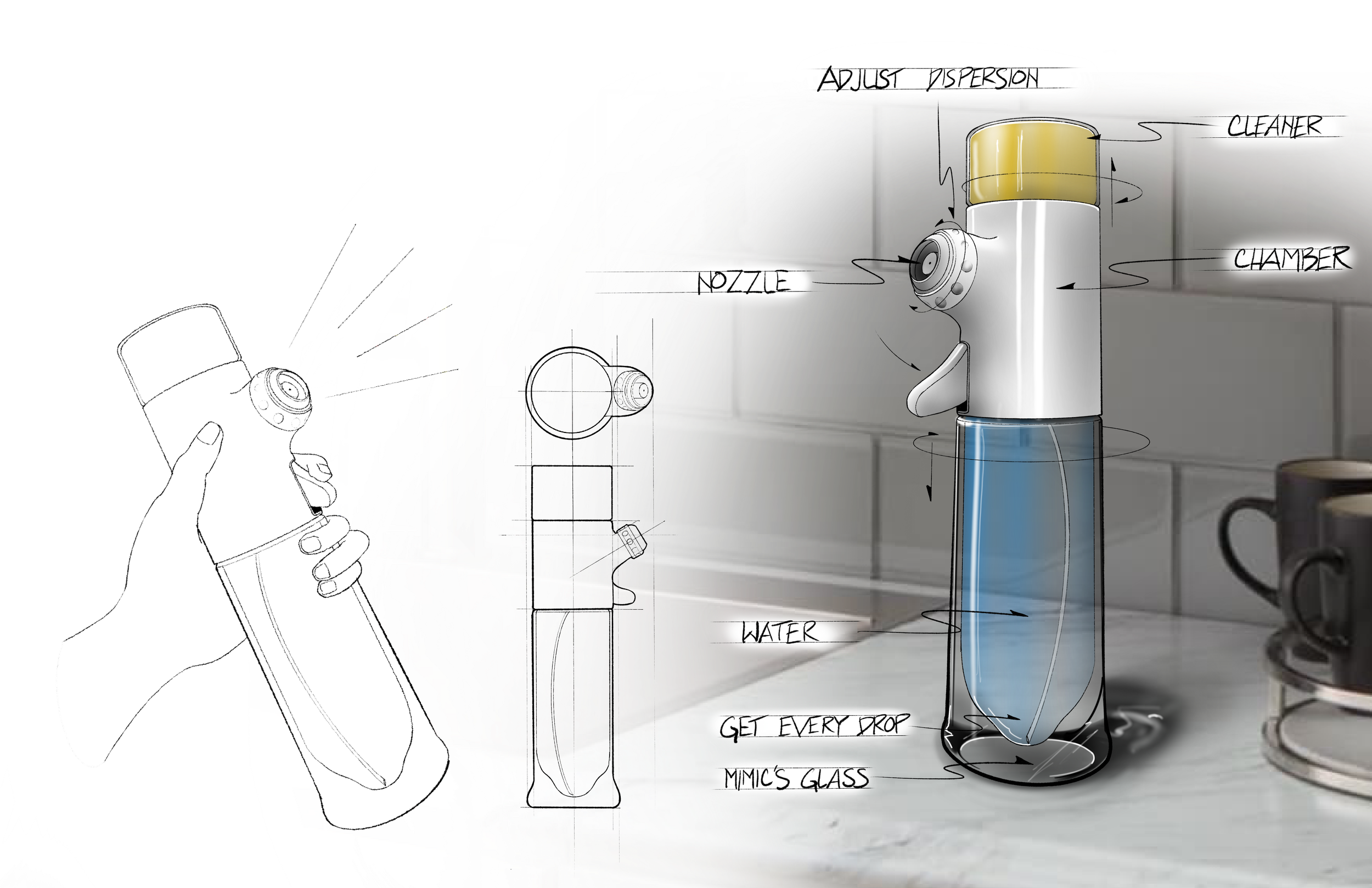
Head and chamber. Where the concentrate meets the water. Procreate.
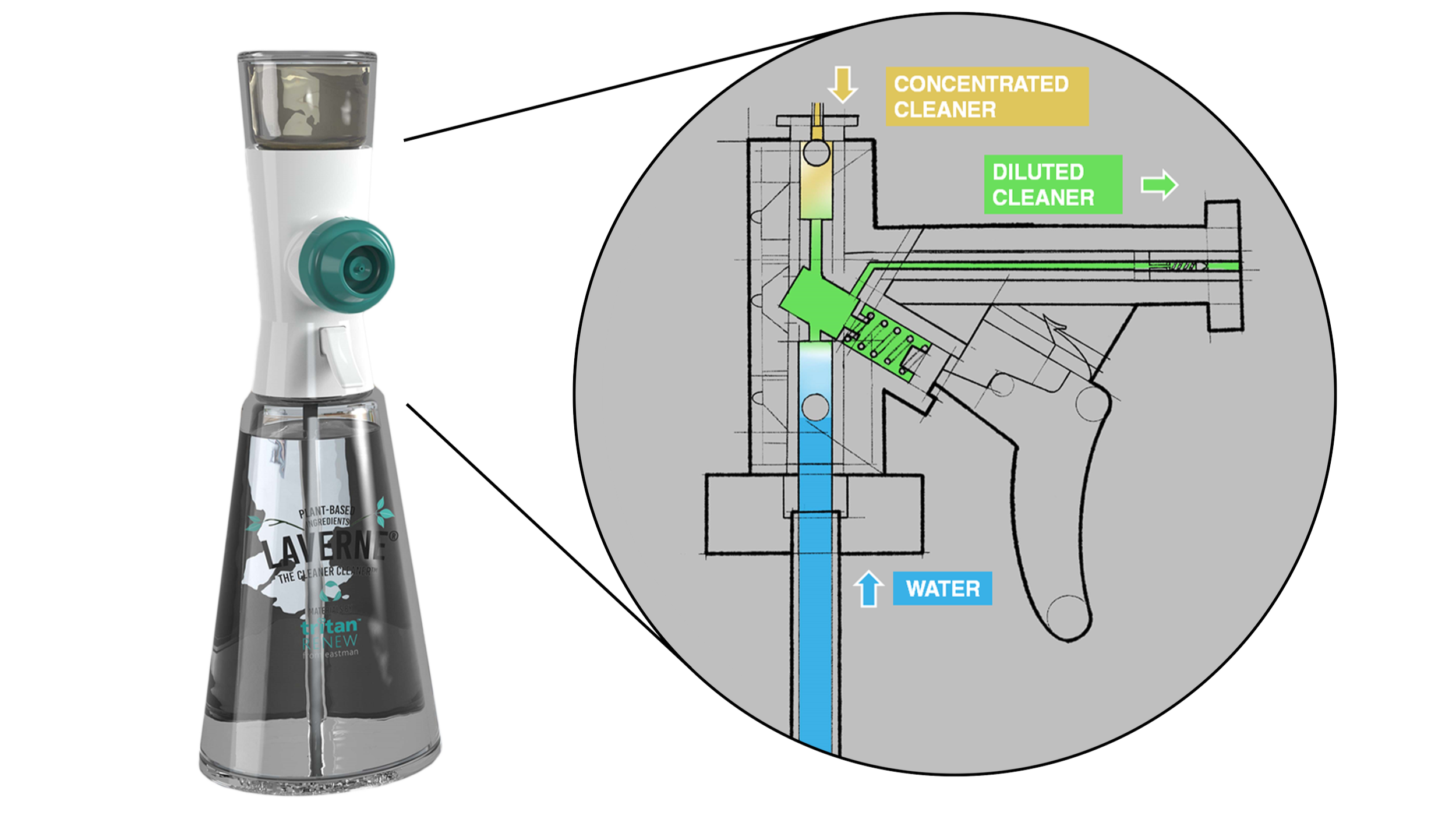
How it mixes. Concentrate from the cartridge, water from the body, diluted cleaner out the nozzle. KeyShot, Illustrator.
Swap the cleaner, reuse the bottle.
LAVERNE
Body: a tapered, transparent bottle in Tritan Renew 50%, blow-molded, with a wide base so it stands on a wet counter. Fill it from the tap.
Head: injection-molded Tritan Renew, light gray, with a teal textured nozzle you can read at a glance. A spring and ball-check pump inside.
Cartridge: a small clear cylinder of concentrate that clicks into the top of the head. Color-coded by cleaner. Return it empty.
Straw: Tritan Renew with a nylon filter at the foot, so the pump never pulls grit.
Modeled in SolidWorks, rendered in KeyShot. Eleven parts; nine in Tritan Renew 50%, two in steel, gaskets in silicone.
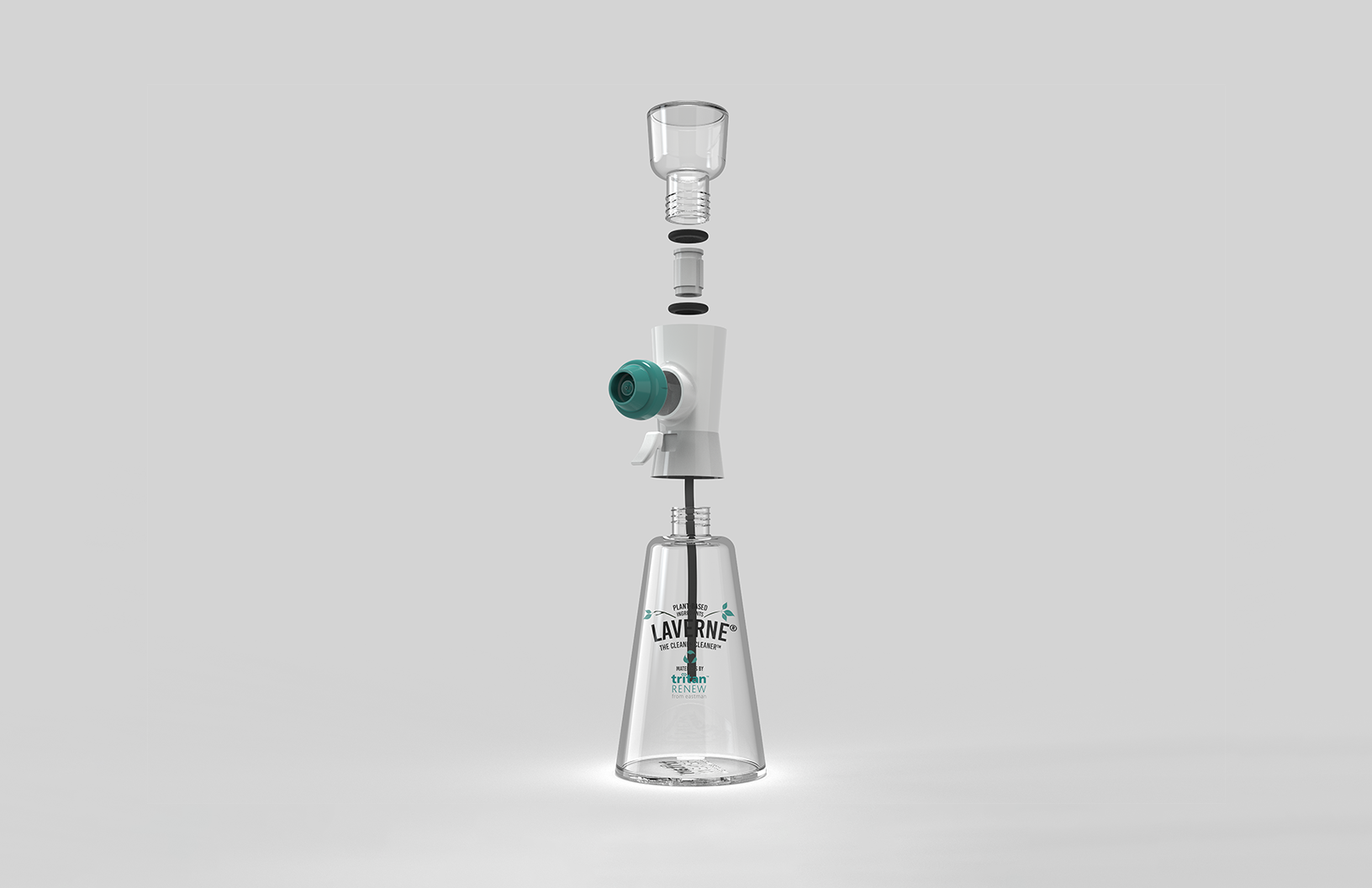
Exploded view. KeyShot.
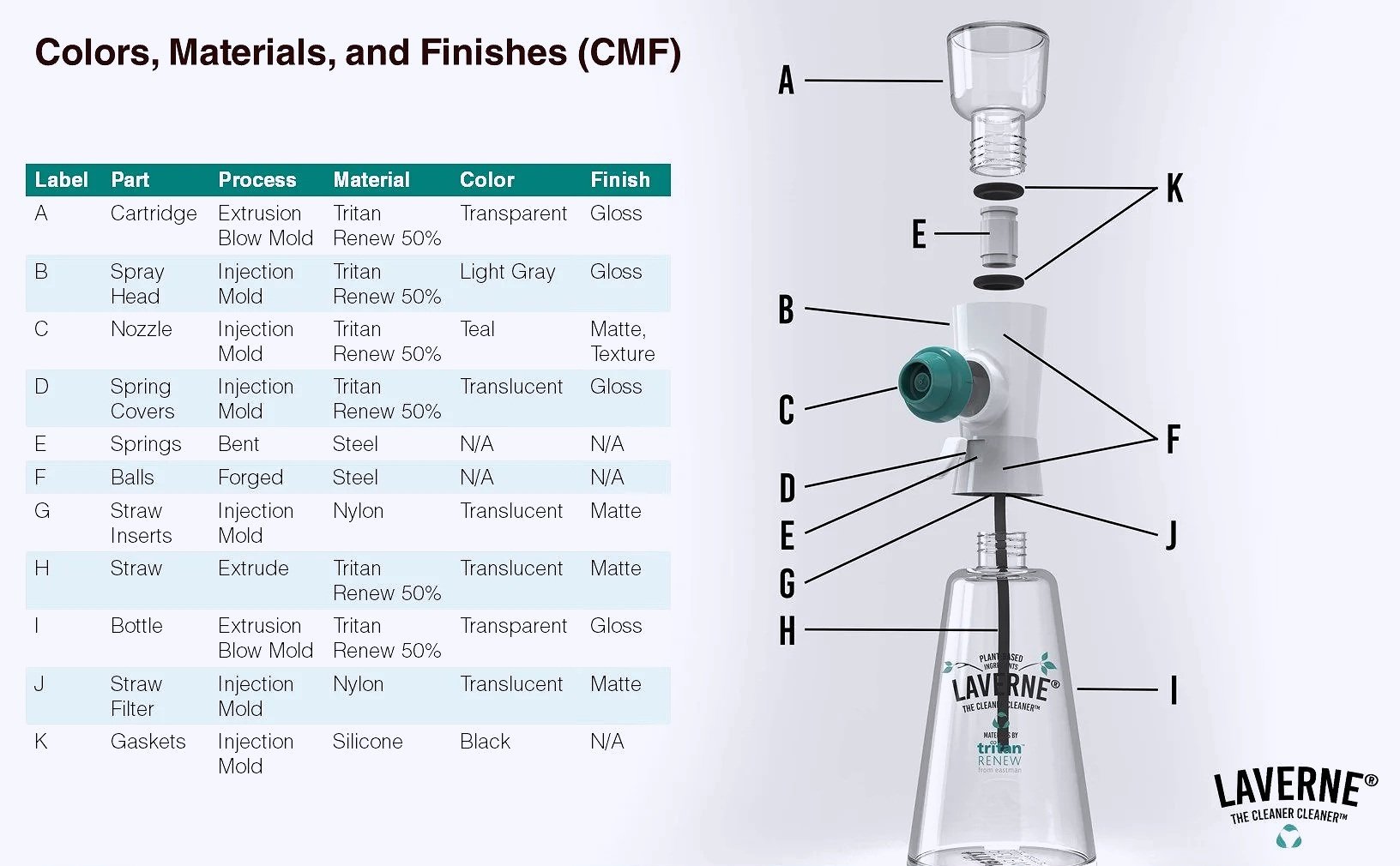
CMF and bill of materials. Every molded part in Tritan Renew 50%.
Kits
Bottle, brand, five cleaners. KeyShot.

In the box: one bottle, one head, a set of cartridges, a return bag.
Cartridges: five plant-based cleaners, each a color. Swap in a second; the head rinses itself with the next pull.
Return: empties go in the bag, the bag goes in the mail, credit comes off the next box.
Brand: LAVERNE, “the cleaner cleaner.” Kraft box, teal accent, Tritan Renew mark on the cap.
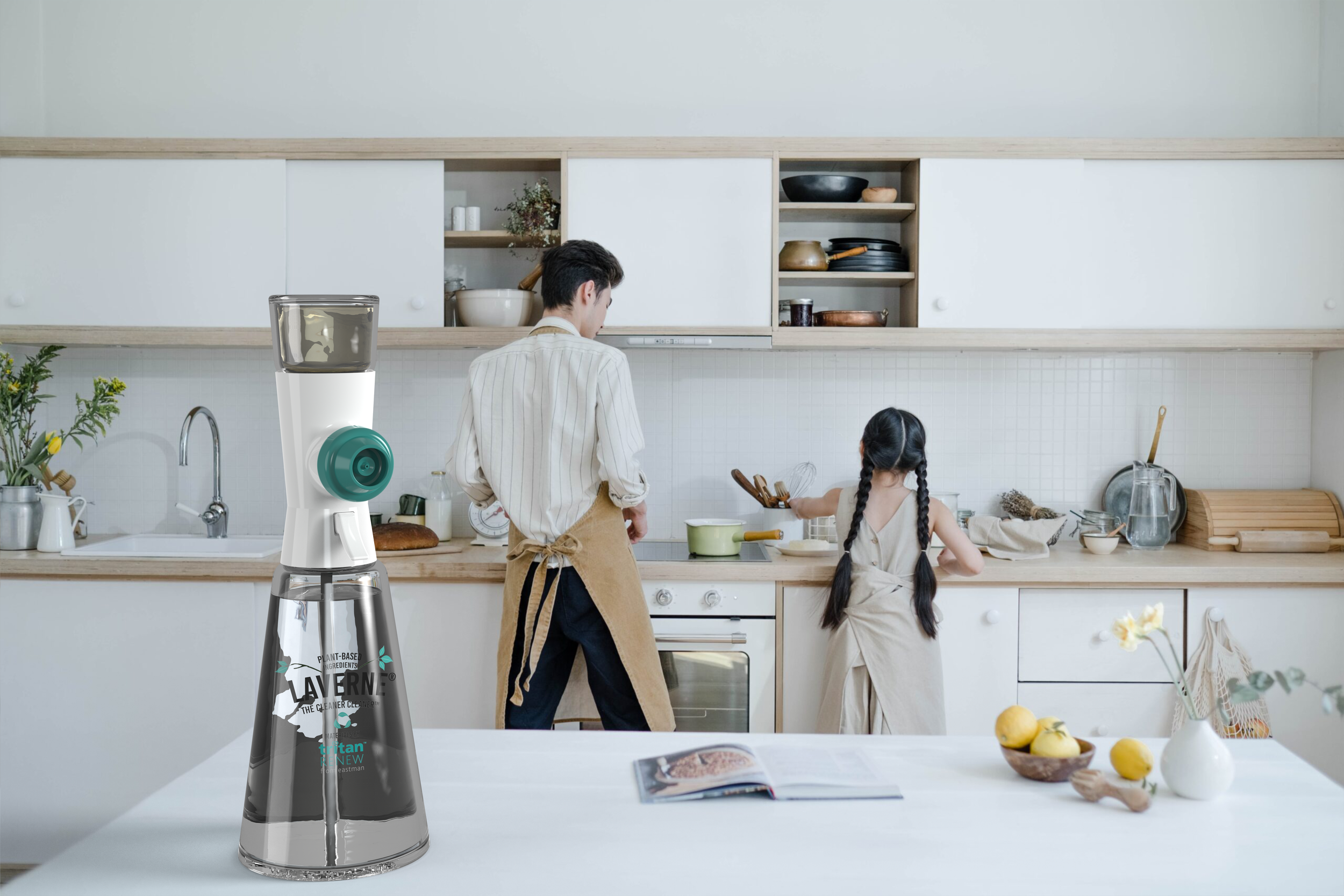
On the counter. KeyShot render over a stock photo.
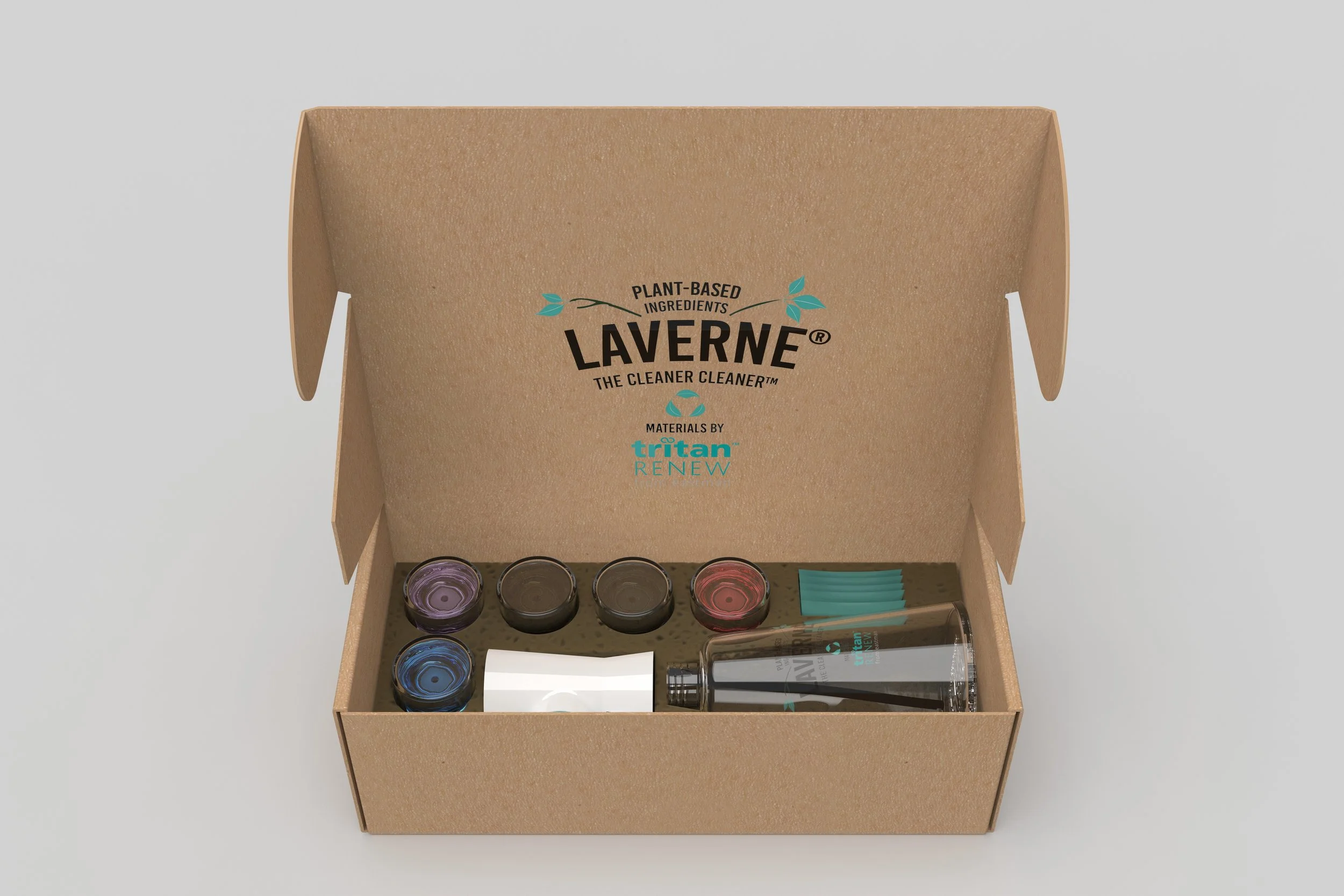
The starter kit, as it arrives. KeyShot.
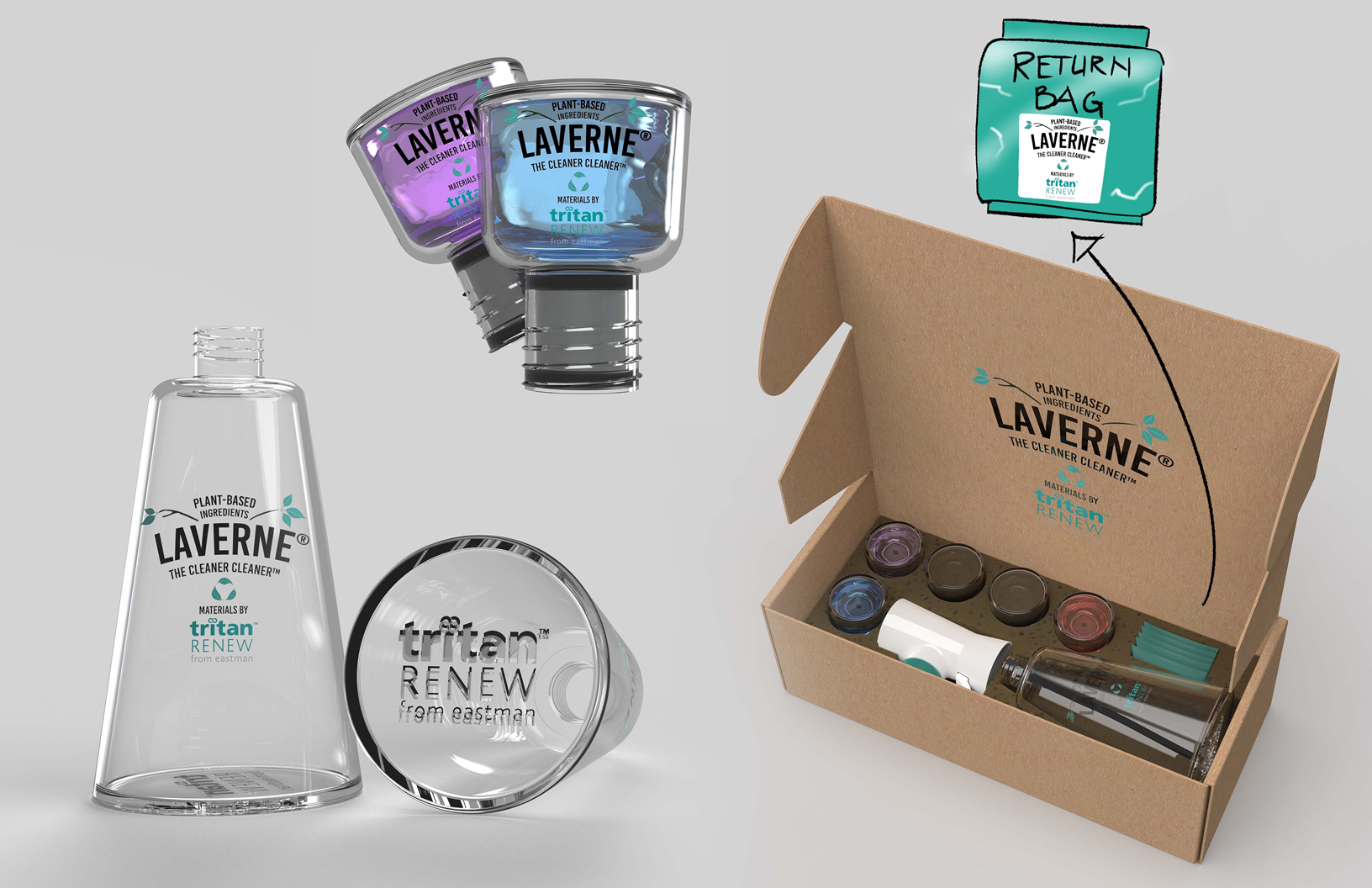
The return bag. KeyShot; bag drawn in Procreate.
Feedback & Takeaways
What held up: concentrate plus water in one durable bottle.
What didn’t: thin research, a high plastic count, and a mechanism never proved. That is the 2026 team’s list.
What I learned: a strategy document, a roadmap and a subscription model are design work too. This studio was where I first put a business case next to a render.
Revisiting it, 2026
Five years on, I’m leading a team of three reworking this for the iF Design Student Award, mentored by designers at Lenovo. The 2021 concept was honest about the problem and optimistic about the answer. A bottle of recycled plastic is still a bottle of plastic.
Less plastic, measured: cut the plastic in the system, not just recycle it, and say by how much.
A working model: build and test the mixing mechanism, so the claim is a demonstration, not a diagram.
Better research first: a survey, interviews, and a look at what is actually under people’s sinks.
UN Sustainable Development Goal 12, Responsible Consumption and Production. Submission February 2027.
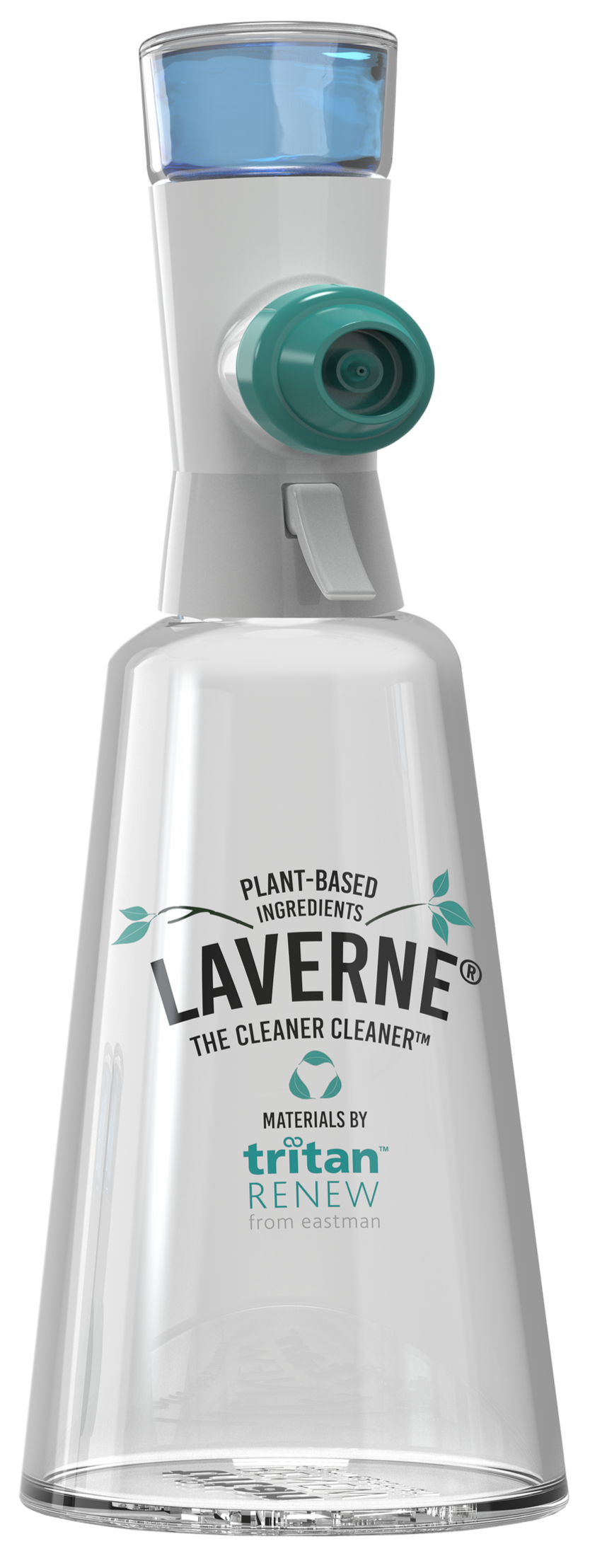
The 2021 design, the starting point. KeyShot.
Work
Cooking without Sight
Aurora History Museum
Teaching Design
Lunar Habitat Table
“Phygital” Major Appliance Shopping
Remote First Appearances
ErgoTrack Tool Access
Universal Spray Bottle